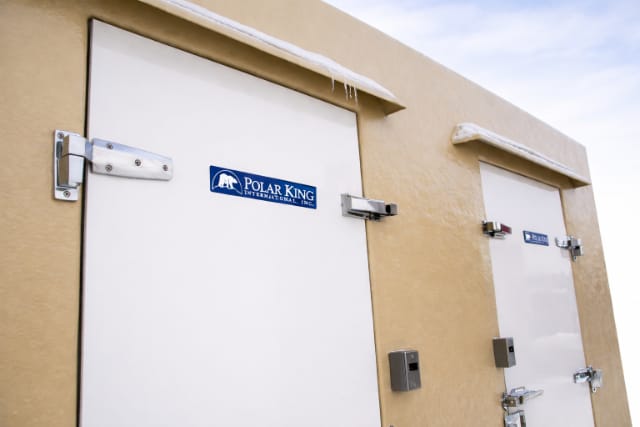
Notice your energy costs climbing or the temperatures in your walk in becoming less consistent? You’ve probably considered the usual suspects: compressors, refrigerant levels, insulation, and controls. But your real problem may be something much simpler and much easier to miss: your walk in cooler or freezer door.
This most frequently used component in your walk in cooler or freezer is also the most likely to fail quietly. And when it does, it won’t shut down your operation. It will slowly start allowing heat to penetrate your walk in, increasing energy costs a little at a time, every single day.
Why your door is the most vulnerable part of your cold storage system
Unlike insulated panels or refrigeration equipment that are protected, your walk in cooler door is subjected to dynamic stress on a regular basis. It’s opened and closed dozens, or even hundreds, of times each day. It’s exposed to rough yanking, slamming, cart and tray impacts, propping open, and wide differences in temperature.
Over time, even a well-built door will start to show wear. Seals loosen, hinges sag, alignment drifts, and materials start to break down as your walk in begins a steady decline in efficiency.
Slow, stealthy energy drains
Most door-related energy loss starts as subtle issues that add up over time. These issues may come from:
- Worn or damaged gaskets. Door gaskets are your first line of defense against outside air. When they crack or compress, warm air infiltrates the gaps that appear in damaged areas or around the frame. This warm air can cause temperature fluctuations, increased humidity, frost, or condensation buildup. It also makes your system work harder to maintain consistent temperatures, which raises your energy bill and reduces the lifespan of your walk in.
- Misaligned doors. A door may look closed, but if it’s not sitting squarely in the frame, you’ll likely find small gaps along the edges. These gaps are enough to create a constant influx of warm air. Misalignment can come from improper installation, the building settling over time, or repeated heavy usage. Because the gaps in the door seal are subtle, they often go unnoticed until multiple issues compound their effects. Even a slight misalignment can prevent a walk in freezer door from sealing properly.
- Failing hinges and hardware. Over time, hinges loosen, sag, or wear unevenly. Latches and closers can also lose effectiveness. This failure can prevent doors from fully closing, cause uneven pressure along the seal, and increase air leakage with every cycle. High-traffic environments can accelerate this kind of wear quickly.
- Thermal bridging in traditional door materials. In steel-framed doors, the material itself can contribute to energy loss. As a thermal conductor, steel is much more likely to transfer heat from the outside environment into the cooled interior than an insulator, such as fiberglass. This area of conductivity is a thermal bridge that insulation alone can’t fully neutralize. Even if the door appears structurally sound, it may still be allowing heat transfer at a material level.
These problems may seem minor when looked at individually, but multiple issues compound together to create a continuous load on your refrigeration system. This increases energy consumption, compressor run times, and wear and tear on your walk in’s critical components, which in turn reduces the usable life of your system. What starts as a small inefficiency becomes a measurable operating cost.
Want a deeper dive into the door components that affect how efficiently your walk in operates? Check out our Anatomy of a Walk in Door article.
The “quick fix” problem
Most people’s first response to obvious wear is to repair visible issues, which may include replacing the gasket, adjusting the hinges, or realigning the door. While this can be an effective strategy in some cases, it is often just the tip of the iceberg. Once you repair the first issue, another issue may pop up, or alignment issues may keep recurring.
If the door structure is compromised, you may find yourself in a cycle of ongoing maintenance that fails to significantly improve performance. You can replace individual components, but once a door system has worn, shifted, and been adjusted over time, it’s difficult to restore the consistent, full-perimeter seal it had when it was new. Without that consistency, small air leaks never fully go away, and if the door material itself is contributing to heat transfer, no amount of adjustment will be able to resolve the issue.
Walk in Cooler/Freezer Door Self-Inspection Checklist
Think your walk in cooler or freezer door may be losing efficiency? Use this handy checklist, a flashlight, and a good pair of eyes to help find the areas around your door where costly energy is escaping.
Look for the following signs:
-
Seal and gaskets
-
- Cracks, brittleness, or compression on the gasket
- Gaps between the gasket and frame when the door is closed
- Moisture, frost, or condensation forming around the door seal
- Cold air escaping or warm air entering when you run your hand along the edges with the door closed
-
Door alignment and fit
-
- Door not sitting flush within the frame when closed
- Visible gaps along the top, bottom, and sides
- Having to push or pull the door to latch it
- The door swinging open on its own when unlatched
-
Hinges, latches, and hardware
-
- Loose, sagging, or worn hinges
- The door failing to close and latch completely without assistance
- Grinding, popping, or scraping sounds when opening or closing
-
Insulation and surface integrity
-
- Warping, bulging, or soft spots in the door panel
- Cracks or damage to the outer surface
- Areas that feel warmer to the touch
- Recurring frost patterns
-
Signs of thermal bridging
-
- Condensation on the exterior of the walk in freezer door
- Temperature fluctuations inside the walk in close to the door
- “Hot spots” or inconsistent cooling zones near the entrance
- Refrigeration system running more frequently than usual
-
Operational red flags
-
- Rising energy bills without a clear explanation
- Increased maintenance needs
- Frequent need for gasket, hinge, or alignment repairs
Not sure how to handle your walk in cooler or freezer’s growing energy bills? Check out our Repair or Replace Decision Guide.
Modern fiberglass replacement doors eliminate losses
If your door has multiple problems, or fails again after repair, it may make more sense to replace the door, rather than continue to attempt repair. Today’s fiberglass replacement doors are designed to go beyond the obvious symptoms of energy loss to address the root cause.
Steel replacement doors are not the most efficient option. Because steel is a conductive material, it can allow heat to transfer between environments, even when insulation is present. And over time, as components shift and wear, maintaining a consistent seal becomes increasingly difficult, allowing small gaps and energy loss to develop.
Fiberglass replacement walk in cooler doors are a better alternative. Unlike steel, fiberglass helps prevent heat transfer through the door structure while reacting similarly to insulation during temperature changes, reducing stress that often occurs between materials over time. Fiberglass doors are designed to create a tighter, more consistent barrier between interior and exterior environments.
Polar King replacement doors take efficiency a step further, eliminating hot spots caused by thermal bridging or voids in foamed-in insulation. Each door features a one-piece panel of rigid insulation encapsulated in fiberglass with a preassembled frame, which creates a consistent, full-perimeter seal that holds up under heavy use. This easy-to-install, non-conductive door system helps reduce energy loss, stabilize interior temperatures, and deliver long-term performance in demanding cold storage environments.
Walk in door replacement ROI
Replacing your failing walk in freezer door isn’t just a maintenance decision. It’s an operational efficiency upgrade. Continuous air leakage and heat transfer put unnecessary strain on your compressor, creating unstable internal temperatures, and accelerating wear on critical components.
A properly installed replacement walk in door can eliminate these issues, helping to reduce system workload, improve internal temperature consistency, and minimize recurring maintenance issues caused by worn-out seals, misalignment, and/or thermal bridging. This increased efficiency translates into lower energy consumption and less strain on your equipment.
Based on industry benchmark estimates for standard commercial walk in freezer applications, a mid-size unit such as an 8×10 freezer could cost in the range of $4,000–$5,500 or more per year to operate at current national average commercial electricity rates, and it would cost significantly more to run in high-rate states like California or New England. Cooler applications typically cost less to operate, while aging or systems with worn out seals could push beyond the high end of those ranges.
In real-world applications, your actual savings will vary depending on the size and condition of your system and the frequency and intensity of your door usage. But a failing walk in door will still be a persistent source of energy loss even after you control for differences in traffic and operating intensity.
The ROI is rarely immediate, but it is steady and will continue compounding. Even small daily reductions in energy loss lower electricity consumption, reduce compressor workload, and cause fewer maintenance demands over time. While results vary by application, these incremental efficiency gains can translate into hundreds or thousands of dollars in avoided energy waste annually per system, particularly in facilities operating in mid-to-higher cost ranges.
Over the life of the door, those savings compound into a meaningful reduction in operating expenses. Instead of a one-time repair, you’ll get long-term improvement in system performance.
Stopping heat transfer in its tracks
Your walk in cooler or freezer is only as efficient as its door. Even minor issues affecting this area today can translate into continuous energy loss, higher operating costs, and unnecessary wear on your refrigeration system over time.
Whether you repair your worn components or replace your aging door, taking action now is one of the most effective ways to reduce energy waste, stabilize performance, and take control of your operating costs. Top of Form
Find out how to spec a walk in cooler or freezer replacement door here.
Upgrade your walk in cooler or freezer with Polar King replacement doors
Need a walk in cooler or freezer replacement door? You can make your walk in more efficient than ever with a Polar King replacement door.
Polar King’s patented fiberglass construction prevents thermal bridging found in steel doors, where heat passes through the metal to the interior, and our rigid insulation eliminates the hot spots caused by voids in sprayed-in insulation. The continuous, easy-to-clean surface is also a perfect fit for hygienic applications such as healthcare, foodservice, pharma, and food processing.
Explore Polar King replacement door upgrades.
Frequently Asked Questions (FAQs)
How can a walk in cooler door cause energy loss without showing obvious signs of damage?
Although your walk in cooler or freezer door may still appear to be working normally, small issues like worn seals, slight misalignment, or heat transfer through door materials may be allowing warm air to enter, pushing cold air out. Because these problems develop gradually, they may go unnoticed while they continuously increase energy use and force your refrigeration system to work harder.
How do worn door gaskets affect a walk in cooler’s energy consumption and performance?
Your walk in cooler’s door gasket is the primary barrier that prevents outside air from entering the interior refrigerated space. When gaskets crack, compress, or lose flexibility, their tight seal becomes compromised. This allows warm, humid air to enter your walk in, leading to temperature fluctuations, increased compressor run time, frost buildup, and higher energy consumption.
What are signs that it’s time to replace my walk in cooler or freezer door?
Common signs include visible gaps around the door, difficulty achieving a tight seal, recurring gasket or hinge repairs, and doors that don’t close properly. You may also notice rising energy bills, inconsistent internal temperatures, or excessive frost and condensation. If you have multiple issues or if repairs no longer restore performance, replacing the walk in cooler or freezer door is often the more cost-effective long-term solution.
What makes a fiberglass walk in door more energy-efficient than steel doors?
Fiberglass walk in cooler doors are non-conductive, which helps prevent heat transfer through the door material. Steel doors are conductive and can allow heat to pass through, even when they’re insulated. Unlike steel, fiberglass and insulation have similar material properties, allowing them to expand and contract together and maintain a more consistent seal over time. This reduces air leakage and helps the refrigeration system operate more efficiently.
What is the ROI of replacing a walk in freezer door vs. continuing to repair an aging one?
Continuing to repair an aging door may address individual issues temporarily, but it often fails to eliminate the underlying causes of energy loss, which leads to higher long-term operating costs. Replacing a failing walk in freezer door can immediately improve efficiency, lowers compressor workload, and improves temperature consistency. Refrigeration systems often represent a significant portion of a facility’s energy use, so even small efficiency improvements can lead to significant cost savings over time.