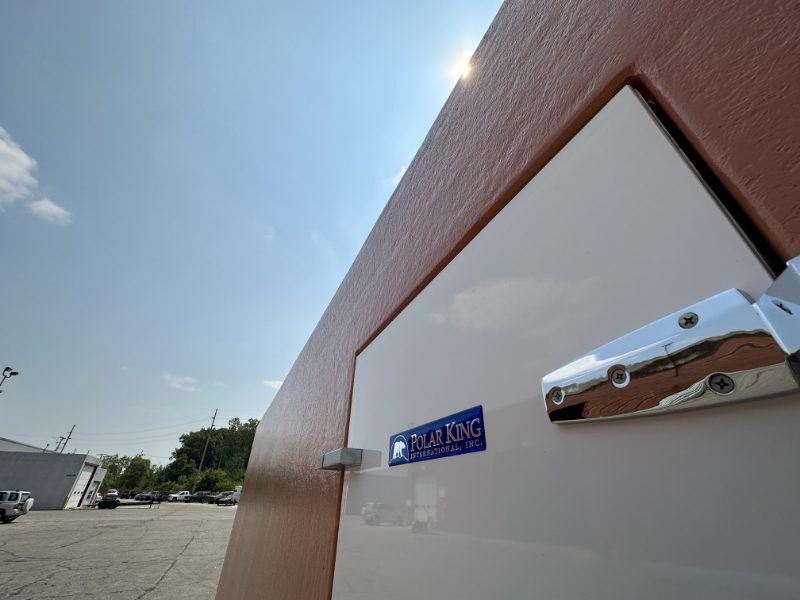
See any of these warning signs on your walk in cooler or freezer? Condensation on the threshold. An unusually heavy door that’s hard to open. Ice forming along the door frame. These issues are more than just a minor annoyance. They’re indicators that your walk-in door isn’t sealing properly, which means that profit or even the safety of your perishables could be at risk.
The door is the most critical and hardest-working non-mechanical component in your walk-in cooler or freezer. It’s also both a potential weak point where heat can penetrate the unit and a key factor in maintaining energy efficiency and food safety. When designed and maintained properly, a high-quality door effectively insulates the cold air inside from warm air outside, prevents ice buildup, and ensures safe, reliable operation for years to come.
Why walk in doors matter
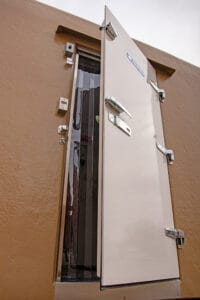
If your walk in was designed and built well, its three solid sides should have excellent insulation. Its biggest vulnerability will be on the side where your walk in cooler door creates a break in the continuous surface. Heavy, metal-skinned doors have seams where heat and moisture can penetrate and, by nature, conduct heat. A better choice would be a Polar King seamless fiberglass door, which insulates against heat and moisture at a fraction of the weight and provides long-lasting durability.
Because the door experiences significantly more wear and tear than any other part of a walk-in unit’s structure, it’s the first thing that should be checked if the temperature in your unit is fluctuating or your energy usage is rising unexpectedly. Any gaps around the door, even if they’re minor, can allow warm air to enter the unit and force the refrigeration system to work harder. A poorly sealed or misaligned door can also cause condensation or ice buildup, which can waste energy, compromise the safety of your perishables, and possibly even seal the walk in shut.
Let’s take a closer look at the critical components that work together to keep warm, humid air out and help reduce your energy costs.
Gaskets: the importance of a tight seal
Gaskets help create an airtight barrier around the door of your walk in whenever it’s closed. The gasket is a small strip made of flexible rubber or vinyl that compresses to completely fill the space between the door and frame. When your gasket, door alignment, and latch all work together properly, they create an airtight seal that keeps warm air out and cold air in.
When the seal is compromised, warm, humid air from the outside rushes into the cooler space, rapidly cooling water vapor and causing it to change state to liquid water (if the temperature is above 32 °F/0°C) or ice (if the temperature is at or below 32 °F/0°C). If you see ice or water on the inside or outside of your walk in, or if you notice an increase in your electric bill, check your gasket for ripped edges or loose corners, and see if it is pushing back instead of compressing easily when you close the door.
Replacing your gasket could be a quick and easy fix, but these signs may also indicate a door alignment issue or other wear problems.
Hinges: How door alignment affects seal integrity
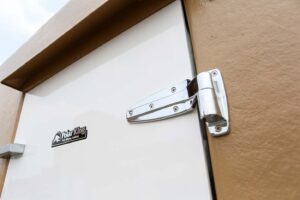
Even if your gasket is in excellent shape, it still needs consistent compression all around for it to make an airtight seal. If your door hinges are loose or worn out from repetitive opening and closing, their lack of integrity can cause misalignment between your door and the frame, which can allow warm air to penetrate the unit.
Performing routine inspections and maintenance on hinges can prevent gaps from forming, protect delicate gaskets, and put a stop to soaring energy bills.
Latches: securing your perishables

Another way that warm air can penetrate the unit is if the latches become compromised. When the hinges bring the door into its closed position, the latches should hold it in place, compressing the gasket uniformly on all sides. But if the latches are worn or misaligned, they might squeeze the gasket unevenly, allowing gaps where warm air can enter the unit and cause icing, condensation, and energy loss.
Latches also have an important safety function, allowing users inside to open the door while maintaining security from the outside.
Sweeps: an unseen layer of efficiency
Situated out of sight at the bottom of the door, the sweep takes on one of the most overlooked sources of walk-in freezer or cooler energy loss. Although the door gasket seals the sides and top of the door very effectively, it doesn’t work as well on the bottom because of the uneven surfaces, and the area sees more frequent wear from running over the threshold every time the door opens.
The sweep adds a flexible barrier right at the floor or threshold that works with the gasket to seal the bottom of the door.
Door closers: protection against human error
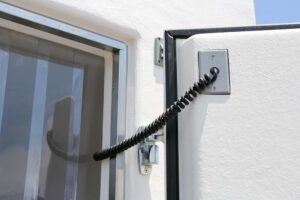
Even with the best training, workers can get distracted and make mistakes when they’re under pressure. A quality door closer ensures that the door to your walk in seals completely after every opening to protect your expensive perishables. When working properly, this simple mechanism helps maintain temperature stability and reduce energy loss even if your walk in is accessed by a variety of different users in a busy environment.
Door and frame heaters: freezer essentials
Because ice on freezers can make doors difficult to open and may even seal them closed, walk in freezers have heaters built into the door and frame to prevent frost and ice buildup and allow easy opening in all conditions.
Energy efficiency starts with high-quality doors
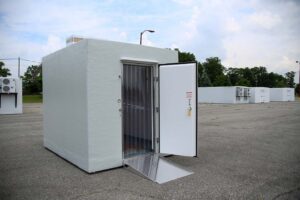
From gasket and hinges to latches and sweeps, every component of a walk-in door works together to reduce energy usage and maintain a consistent temperature inside of your walk in cooler or freezer. Regular inspection and maintenance can extend a door’s life, but when damage or wear becomes significant, replacing the door itself often provides the most cost-effective long-term solution.
With Polar King’s new Replacement Door program, you can upgrade any walk in from any manufacturer with an ultra-efficient Polar King door. Our doors are designed for lasting performance, with the same seamless surface inside and out with rigid polyisocyanate core foam insulation that Polar King is known for. Each replacement door is custom-built to fit any cooler or freezer, restoring energy efficiency, safety, and reliability without the cost of a full replacement unit.
Contact us today and find out how Polar King replacement cooler and freezer doors can boost your cold storage efficiency, or get a fast, no-obligation quote for your door by completing this simple form.