 There’s a reason why many institutional and public-sector purchasing rules require writing a Request for Proposal (RFP) for major equipment purchases. A well-written RFP outlines your organization’s requirements, so that every vendor responds to the same expectations. When done correctly, RFPs not only help purchasers compare products and contracts more effectively, making decision-making easier, but they also provide an auditable path for the rationale behind investments.But not all RFPs are created equal. And when they include information that unintentionally excludes quality products or leaves vague sections open to interpretation, the effects can be costly, or even disastrous.
The cost of poor walk in refrigeration planning
Polar King Regional Sales Manager Dan Parsenow recalls a Florida school district that experienced the effects of poor planning firsthand. They hired a company to install a walk in, but because of the unit’s placement and design, its interior flooded with water. The district ended up having to remove the unit and file an insurance claim. They’ve been purchasing Polar King walk in coolers and freezers for their schools ever since.
This is one example of the site, design and installation risks a well-written walk in refrigeration RFP should bring to the surface before a contract is awarded.
If you haven’t made critical decisions and included them in your RFP, vendors will end up bidding on an installation that may not satisfy your needs. You may award the contract, believing you have controlled the cost and reduced the risk, only to discover that the most expensive omissions never appeared on the winning bid sheet.
If you want to avoid costly mistakes, your RFP must define more than the box you intend to buy. It also needs to define the operational result you expect, the responsibilities each party will assume, and all of the costs required to get a durable walk in cooler or walk in freezer up and running on your specified site.
What a walk in refrigeration RFP should accomplish
A well-written RFP gives vendors the same operational requirements, pricing categories and response format. It helps you compare complete solutions, document the basis for your decision and clarify the winning vendor’s responsibilities.
Parsenow notes that your purchasing department may be more focused on price while the actual users care more about reliability, performance and maintenance. Your specifications need to reflect both viewpoints. For best results, include procurement, facilities, operations and maintenance in the conversation.
Define your performance needs
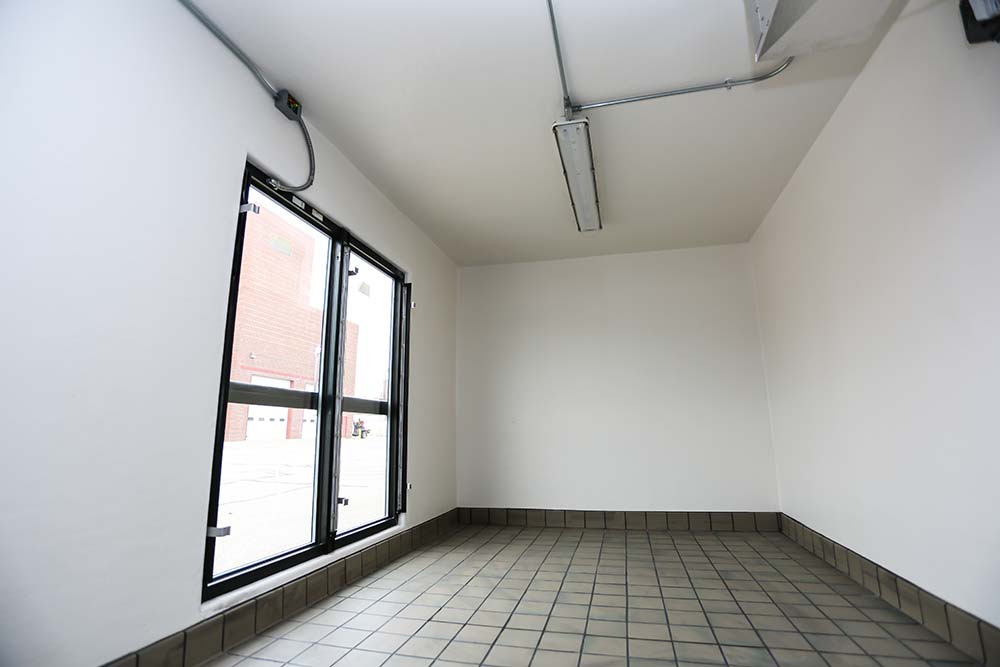
State whether you need a walk in cooler, walk in freezer or combination unit; the dimensions; what will be stored; and the target temperature. Also describe placement, climate, altitude, expected door openings, whether products will arrive cold or will need to be pulled down to temperature, floor loading, available power and required temperature tolerance. Require vendors to disclose the assumptions they used to size the refrigeration system.
Without these details, a unit can meet your stated dimensions and temperature requirements but still be poorly suited to your intended usage and/or site conditions.
Require an all-inclusive installed price
Parsenow’s advice is simple: “You need to compare apples to apples. Go beyond the box cost and consider everything you need to get the unit operational.”
Ask for a fixed total and an itemized breakdown for equipment, freight, set-in-place, lifting equipment, assembly, refrigeration installation, electrical work, startup, site preparation, drainage and weather protection.
Have vendors provide a table showing who will handle and pay for delivery, assembly, refrigeration installation, electrical work, site preparation, startup, and testing. Without it, the proposal that excludes the most work from its price could appear to offer more value than it really does.
Want to learn about more items that are frequently excluded? See The Hidden Costs of a Cheap Walk In Cooler.
Require a committed delivery timeline
Price is only part of the commitment. Have each bidder provide a written lead time from contract award to delivery, identify any assumptions that could affect that schedule, and explain how delays will be communicated and remedied. If you are purchasing for multiple locations, also ask how many units the vendor can produce and deliver within your rollout window so you can determine whether or not the supplier has the capacity to meet your schedule at scale.
Define measurable energy performance
“Energy efficient” can mean very different things from one bidder to another. You’ll be better able to compare efficiency if you require each bidder to estimate annual electricity consumption in kilowatt-hours using the same unit size, setpoint, ambient conditions, door-opening frequency and product-load assumptions. Then apply the same local utility rate to each estimate to compare projected annual operating costs.
Ask bidders to identify insulation type and R-value, door-gasket and sweep design, refrigeration capacity and sizing assumptions, and qualified Annual Walk in Energy Factor (AWEF) ratings for applicable refrigeration components. For outdoor units, ask how the construction protects insulation from air and moisture intrusion.
In a three-week field comparison of two outdoor freezers of similar age and size, the Polar King unit used 349 kWh while the competing unit used 928 kWh. Of course, this is a small sample, and results will vary by location and use, but this comparison shows how energy efficiency can affect long-term operating costs.
Want to learn more about the long-term total cost of ownership of a walk in cooler or freezer? Check out our Walk In Cooler & Freezer Costs: The 10-Year TCO Guide
Calculate the Total Cost of Ownership (TCO)
TCO goes beyond purchase and installation costs to capture all costs over the unit’s useful life, including energy, maintenance, repairs, warranty-related expenses, downtime, product loss or relocation, and eventual replacement. As you can see from the energy example above, these costs can vary widely from unit to unit.
Ask for a practical maintenance schedule and compare the schedules carefully. Maintenance that sounds minor during procurement can become disruptive once the walk in is filled and operating. If the unit has seams that require regular resealing, for example, you may need to empty the walk in, store its contents safely, warm the unit enough to complete the work, reseal the seams, pull it back down to temperature and reload it every time the maintenance needs to be performed.
Duration is important when it comes to warranties, but be sure to compare what each warranty includes. Find out coverage terms for the structure, roof, floor, doors, hardware, insulation, compressor and refrigeration components, and ask who pays for diagnosis, labor, travel, shipping, removal and reinstallation.
Polar King’s warranty is a good example of how those terms can be clearly defined. Its standard coverage includes 25 years on the internal foam structure, 12 years on the walk in structure, five years of extended compressor coverage, and one year on miscellaneous parts and accessories and refrigeration system components. Instead of comparing warranties based on a single headline number, have each bidder break out coverage by component so you can see exactly what protection they offer.
Parsenow notes that a manufacturer may cover a failed panel on a walk in cooler or freezer that requires assembly, but you should verify who would bear the cost of dismantling and reassembling the box.
Define standard and emergency response times, after-hours charges, parts availability and escalation procedures. Ask for references from customers with similar applications, operating conditions and climates. When available, also request information about warranty claims or equipment failures involving comparable units.
Also consider the value of reliability and the cost of failure. If a unit fails while in operation, your product may need to be moved or discarded, employees may need to work overtime, you might need to secure emergency refrigeration and your operations could be interrupted. The unit’s expected service life also matters. A cheaper outdoor unit that requires major repairs or earlier replacement can easily become the more expensive choice.
Avoid vague or restrictive specifications in your walk in refrigeration RFP
A vague RFP can produce bids based on different assumptions, while an overly restrictive one may unintentionally exclude solutions that perform as well as, or better than, the one described.
If your procurement rules prohibit naming a brand, describe measurable results. Parsenow suggests defining measurable characteristics and performance requirements. These might include factory-prefabricated, seamless fiberglass construction, and documented energy performance. Use “equivalent or better” language where appropriate to preserve competition without lowering the standard.
Identify applicable sanitation, electrical, energy and building requirements as well, including NSF 7, UL-listed electrical and refrigeration components, qualified AWEF scores, the International Building Code and the National Electrical Code when relevant.
Keep a total-cost scorecard
Score each bid on all-inclusive installed cost, projected energy cost, construction and durability, maintenance, warranty and service, performance, delivery and customer references.
For multi-site buyers, also consider standardization and vendor capacity. Common components can simplify parts inventory, training, service, and future purchasing, but those benefits depend on having a supplier capable of supporting your organization as it grows. Confirm that each vendor has the manufacturing capacity, supply chain resources and financial stability to fulfill the initial order, support future locations and maintain parts and service availability over the expected life of the equipment.
As Parsenow advises, “Make sure to compare apples to apples.”
Sample Walk in Cooler and Freezer RFP Scorecard
| Evaluation category | Example weight |
|---|---|
| All-inclusive installed cost | 25% |
| Projected 10-year energy cost | 15% |
| Construction and durability | 15% |
| Warranty and service | 15% |
| Maintenance requirements | 10% |
| Performance and code compliance | 10% |
| Delivery timeline, and capacity | 5% |
| Customer references | 3% |
| Equipment standardization | 2% |
Adjust the weights to reflect your organization’s unique priorities, but make sure every bidder uses the same assumptions, pricing categories and ownership period.
Frequently Asked Questions
What should a walk in refrigeration RFP include?
A well-written walk in refrigeration RFP should include operating conditions, performance requirements, installed cost, energy estimates, maintenance, warranty, service response times, committed delivery lead times, vendor capacity and ability to scale, exclusions and references. Multi-location purchasers should also ask vendors to demonstrate that they can meet the required rollout schedule at scale.
How do you compare walk in cooler bids fairly?
Give every bidder the same assumptions and require the same pricing categories, performance data and table of project responsibilities. Compare the complete operational result, not the box price alone.
Should a walk in freezer RFP name a manufacturer?
Follow your procurement rules. When a brand cannot be named, use performance-based requirements and allow “equivalent or better” solutions.
What does TCO include for walk in refrigeration?
Total cost of ownership includes purchase, delivery and installation, energy, routine maintenance, repairs, warranty-related expenses, downtime, product relocation or loss, and eventual replacement. Comparing TCO makes it easier to see which walk in cooler or freezer will actually cost less to own over its full service life, rather than relying solely on upfront purchase price.
Choose a walk in engineered for long-term value
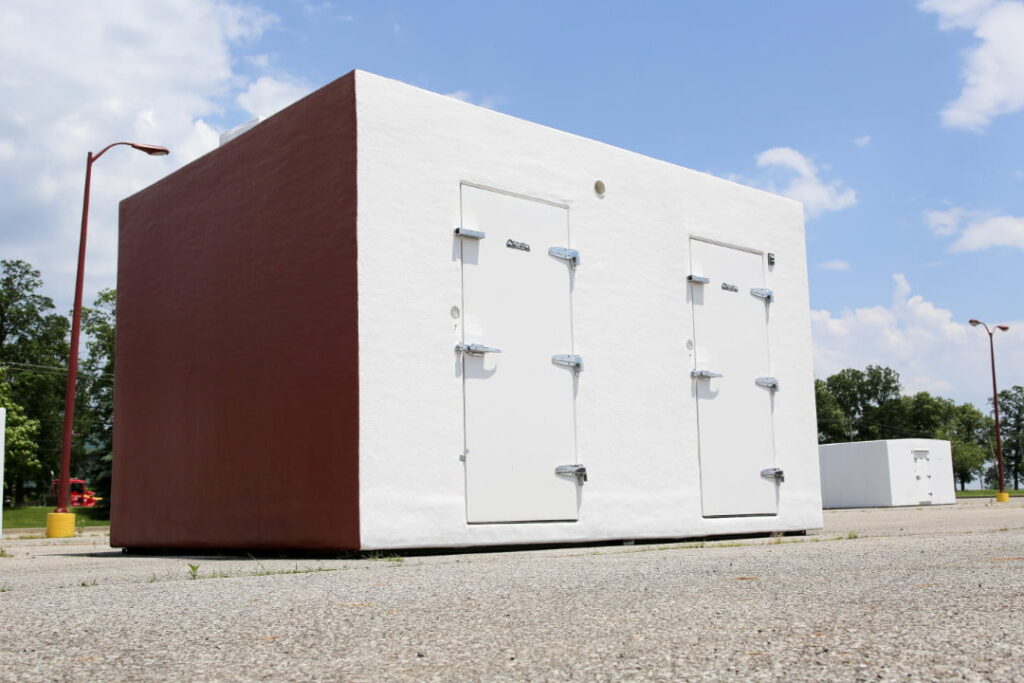
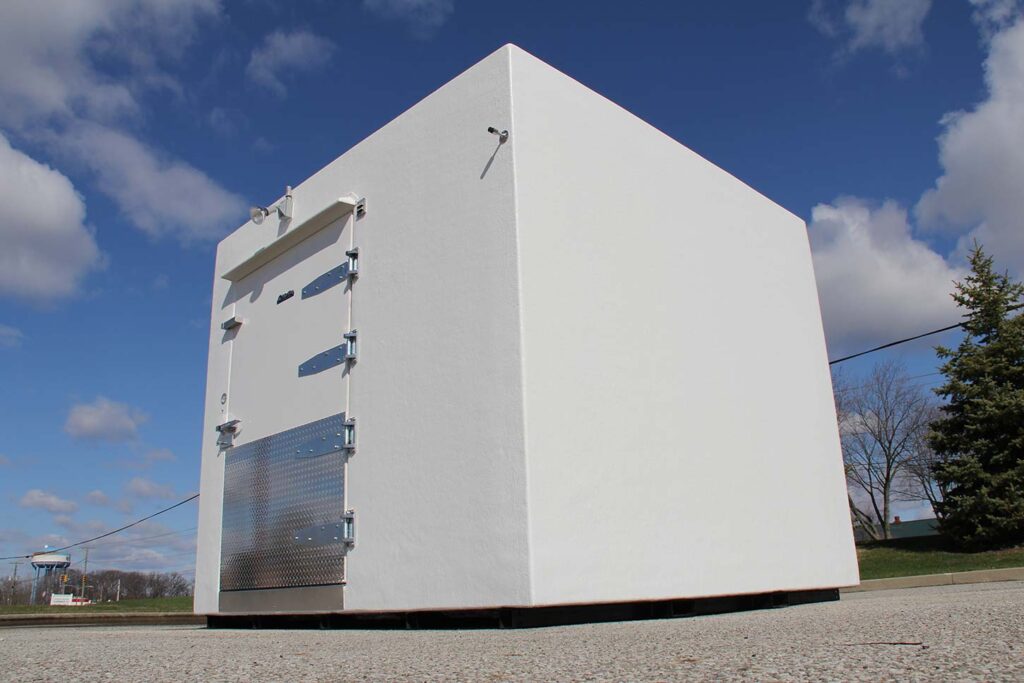
Polar King outdoor walk in coolers and freezers are engineered for outdoor use from the ground up, made to order to the dimensions, temperature requirements and operating needs of each application. Their seamless fiberglass construction resists water, rust and corrosion, while our factory-built, one-piece design eliminates the on-site assembly required by panel-built walk ins.
We can also provide detailed architectural specifications on construction, insulation, refrigeration, floor loads, doors and customer responsibilities to help you define and compare solutions more accurately. You’ll work with a single point of contact from your first inquiry through delivery, helping maintain accountability as your project moves from specification and ordering through production and installation.
Family-owned since 1982, Polar King brings more than four decades of experience to commercial walk in refrigeration. Our longevity gives procurement teams another factor to consider when evaluating whether a supplier has the experience, continuity and capacity to support not only the initial purchase, but future locations and long-term equipment needs.
When your RFP goes beyond the initial unit price to evaluate installed cost, energy performance, maintenance, warranty, durability, delivery reliability, and vendor capability, our factory-built walk ins offer a strong combination of long-term value and supplier accountability.