You hear the temperature alarm going off for the nth time. As you call the technician, move product, and approve another repair invoice, you wonder, “How long are we going to keep doing this?”
You’re trapped in a cycle of spending more time and money working around walk in cooler failures, but you know finance will ask why you want to replace the unit if it can still be repaired.
That’s because the repair invoice is easy to see. The other costs of keeping an aging walk in refrigeration system operating are often spread across energy use, staff time, temporary storage, product risk, downtime, and future repairs.
Although this guide focuses primarily on walk in coolers, the same repair-or-replace framework applies to walk in freezers and other walk in refrigeration equipment.
According to Polar King Regional Sales Manager Dan Parsenow, there isn’t a magic dollar amount where repair suddenly becomes the wrong decision.
“It’s more of a judgment call when product’s at risk, downtime’s becoming excessive, and your team’s getting used to having constant service calls for the same unit.”
The goal is to determine when repair is no longer the lowest-risk, lowest-cost path.
Determine whether you have a repairable component or a failing system
Not every refrigeration problem means the entire walk in cooler or freezer needs to be replaced. A damaged gasket, worn hinge, faulty closer, or even a failing door may have a relatively simple solution.
If the structure, insulation, and refrigeration system are still in good condition, replacing the faulty component may be enough to keep the unit operating reliably for years.
If your issue is door-related, Polar King’s walk in cooler door decision guide can help you determine your best course of action.
Persistent air leaks, chronic condensation, or repeated door repairs may justify replacing the door while keeping an otherwise serviceable unit. But if the door problem is part of broader deterioration, such as structural damage, moisture intrusion, system failure, or declining performance, replacing the entire walk in may make more financial sense.
Walk in cooler repair-or-replace decision factors
| Factor | When to repair | When to consider replacement |
| Condition | Structure and insulation are sound and the problem is isolated. | Structural deterioration, moisture intrusion, corrosion, or multiple failing systems. |
| Repair history | Predictable service with occasional repairs. | Recurring failures or cascading repairs. |
| Performance | Unit maintains temperature without excessive run time. | Temperature problems, frost or ice buildup, or excessive refrigeration run time. |
| Operational impact | Repairs cause little disruption. | Repeated downtime, temporary refrigeration, product moves, or additional labor. |
| Expected repair outcome | Repair is expected to restore dependable service. | Repair is likely to buy limited time while major costs continue. |
Parsenow identifies frost and ice buildup, air penetration, excessive refrigeration run times, and increasing electric bills as signs that a walk in cooler or freezer may be working harder than it should.
Ask your service technician for a prognosis, not just a repair quote
Before you run the financial analysis, find out what the proposed repair is actually expected to accomplish.
A failed component does not necessarily mean your walk in cooler or freezer is nearing the end of its useful life. If your service technician is familiar with the unit and its history, ask whether the current problem is an isolated failure or a sign of broader deterioration.
Your technician may determine that the structure and other major components are in good condition and that replacing one part should restore reliable operation for years. In that case, even a relatively expensive repair may be a good investment.
But the calculation changes if they see other major components nearing failure, structural deterioration, recurring air or moisture problems, or other signs that additional repairs are likely.
Questions to ask your service technician:
- Is this an isolated failure, or are you seeing more widespread deterioration?
- If we make this repair, how much additional dependable service life would you expect it to provide?
- Are there other major components that may require repair or replacement soon?
- Are replacement parts affordable and available for this equipment?
- Based on the unit’s overall condition and repair history, would you recommend repairing it or planning a replacement?
- Does this unit use a refrigerant that may become more expensive, difficult to source, or subject to changing requirements, and should that affect our repair-or-replace decision?
Ask the technician to document the assessment on the service report or in writing, if possible. This gives you independent support for one of the most important assumptions in your financial analysis: how much useful life the proposed repair is expected to provide.
Calculate the cost of delaying replacement
A practical way to evaluate repair versus replacement is to compare what each decision is expected to cost over the same five-year period.
If multiple repairs are expected or required in a relatively short period, or if a single repair estimate approaches 50% of the installed cost of a replacement unit, it may be time to pause before approving the repair and run a full repair-versus-replacement comparison.
That does not automatically mean replacement is the better choice. The unit’s condition, expected remaining service life, operating costs, and likelihood of additional repairs still matter.
Start by calculating the annual cost of operating each unit.
| Annual cost | Existing unit | Replacement unit |
| Energy | $_____ | $_____ |
| Routine maintenance | $_____ | $_____ |
| Expected repair and service costs | $_____ | $_____ |
| Downtime, temporary refrigeration, product handling or loss, and related labor | $_____ | $_____ |
| Total annual operating cost | $_____ | $_____ |
For the existing unit, use recent invoices, maintenance records, utility information, and operating history whenever possible. For the replacement, use manufacturer energy estimates, maintenance requirements, warranty coverage, and reasonable service assumptions.
Next, factor in how long your technician reasonably expects the existing unit to remain dependable after the proposed repair.
| Cost | Keep now, replace later | Replace now |
| Repair required today | $_____ | $0 |
| Existing-unit annual operating cost × years retained | $_____ | $0 |
| Installed cost of replacement* | $_____ | $_____ |
| New-unit annual operating cost × remaining years in analysis period | $_____ | $_____ |
| Projected total cost | $_____ | $_____ |
*If the existing unit is reasonably expected to remain dependable beyond the entire analysis period, enter $0 for replacement in the “Keep now, replace later” column.
Then calculate:
Cost difference = (Keep now, replace later total) – (Replace now total)
A positive number means replacing now is projected to cost less during the analysis period. A negative number means repairing and keeping the existing unit is projected to cost less.
This calculation is not intended to favor replacement. Instead, it makes it easier to see which option is projected to deliver the better financial outcome over the analysis period.
A substantial repair that gives you several more dependable years may be an excellent financial decision. But repeatedly investing in a deteriorating unit simply to postpone a replacement that is likely to occur soon can increase your total cost rather than reduce it.
For a broader look at ownership costs, see Polar King’s The Hidden Costs of a Cheap Walk In Cooler.
Build the documentation behind your numbers
It’s not enough to create a calculation. You also need to be able to explain where your projected costs and remaining-service-life estimates came from.
Build a repair-or-replace file that includes:
- Unit age, model, and location
- 12 to 24 months of repair invoices and service history
- Maintenance records
- Utility or energy information
- Downtime incidents
- Temporary refrigeration costs
- Product relocation or loss
- Photographs of visible deterioration
- The service technician’s assessment
If the technician believes the current repair should restore reliable operation for several years, document that. If they believe additional major failures are likely or recommend replacement planning, document that too.
Dan Parsenow notes that the economics begin to change when facilities are dealing with repeated service calls, downtime, product risk, and temporary refrigeration. Those costs may never appear together on a single walk in refrigeration repair invoice, but collectively they can show whether an aging unit is still providing good value.
The goal is to give finance more than a request for new equipment. It’s to show the condition of the existing asset, what it is costing your operation, and what each available decision is expected to cost going forward.
Present finance with two complete alternatives
Once you’ve projected both alternatives over the same five-year period and gathered the supporting documentation, give finance two capital-management choices.
Option A: Repair now and replace later
Show the immediate repair cost, projected operating and maintenance costs, expected remaining service life, and the cost of eventual replacement if you expect it to occur within your analysis period.
Option B: Replace now
Show the complete installed replacement cost, projected energy and maintenance expenses, warranty coverage, and expected service life.
Be clear about what the organization will encounter at the end of the analysis period. Two choices can produce similar five-year costs while providing very different outcomes. One option may end with an aging unit approaching replacement; the other may end with a newer asset that still has many years of expected service life.
This context can help finance evaluate more than the cost of today’s repair invoice. It can help demonstrate whether the expense is expected to extend the productive life of a viable asset or simply postpone an approaching capital expense.
If you manage walk in refrigeration across multiple locations, run the same analysis for each unit rather than treating the entire portfolio as a single replacement decision. Then rank potential capital projects by the size of the projected cost gap, the likelihood of additional failures, and the operational risk at each site.
This gives finance a defensible way to prioritize limited capital dollars across the portfolio instead of evaluating replacement requests individually.
If replacement is the right long-term decision but capital approval, delivery, or installation will take time, a temporary walk in rental from Polar Leasing can help maintain cold storage while the permanent replacement moves forward.
Why Polar King is built for the replacement decision
When replacement makes financial and operational sense, Polar King walk in coolers and freezers offer a long-term alternative to continuing the repair cycle.
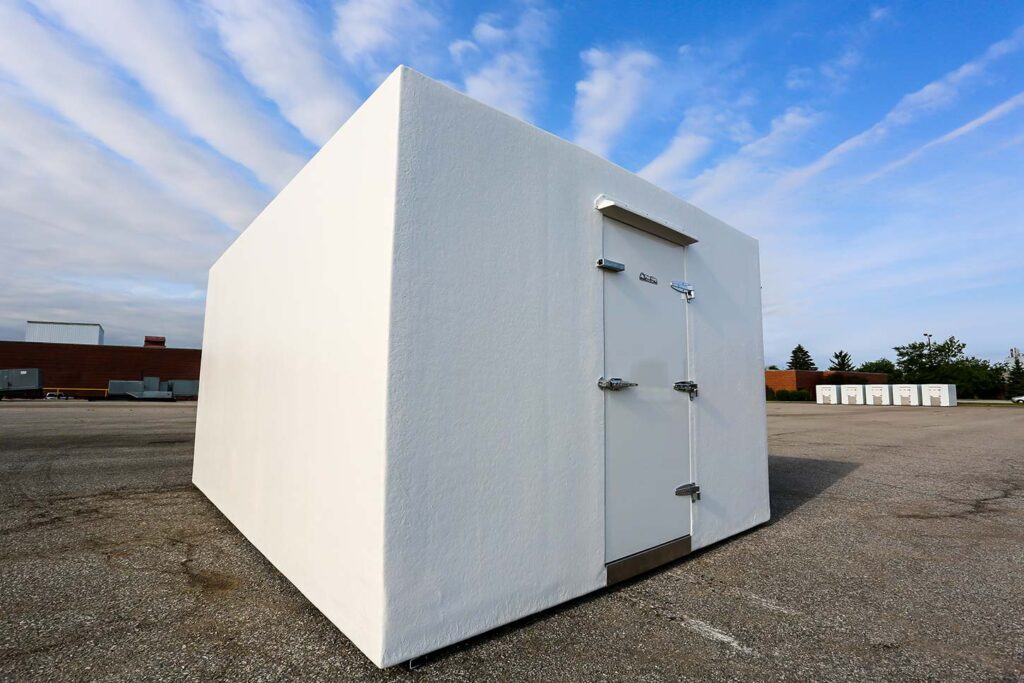
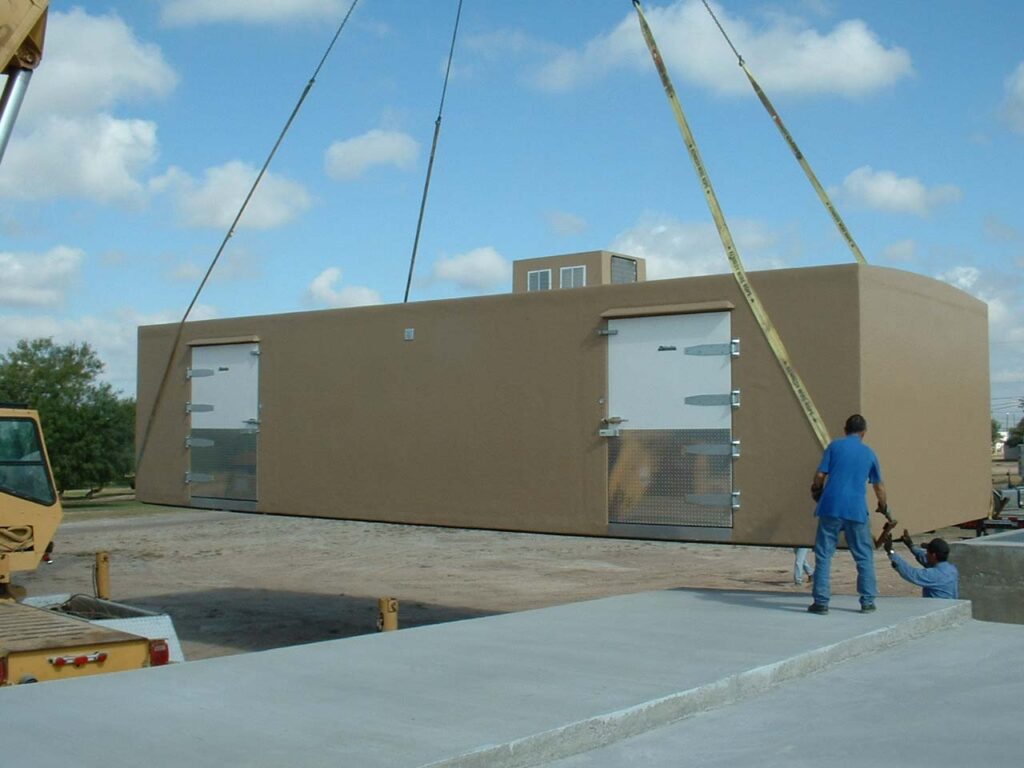
Our durable outdoor walk in coolers and freezers are factory-built with seamless, one-piece fiberglass construction designed to protect insulation from air and moisture while resisting rust and corrosion. These made-to-order units arrive fully assembled and can be up and running in just a few hours with a simple electrical connection.
Family-owned since 1982, Polar King provides a single point of contact from inquiry through delivery, along with ongoing support after installation. Customers can access fee-free technical support for the life of the product, and our warranty coverage includes 25 years on the internal foam, 12 years on the structure, five years of extended compressor coverage, and one year on parts and refrigeration components.
If your repair history is building a case for replacement, contact us today. We’ll help you evaluate the options and build the numbers you need for your capital plan.
Frequently Asked Questions
When should you replace a walk in cooler or walk in freezer instead of repairing it?
Replacement becomes a stronger option when failures recur, the structure or insulation is deteriorating, the unit struggles to maintain temperature, or downtime and operating costs keep rising. Instead of comparing the latest repair invoice directly with the price of a new unit, compare the projected five-year cost of repairing and operating the existing unit — including replacement if it will likely happen during that period — with the five-year cost of replacing it now.
What costs should facilities managers include when making a case for walk in cooler replacement?
Include repairs, energy, maintenance, staff overtime, product relocation or loss, temporary refrigeration, downtime, and the installed cost of the replacement. Using 12 to 24 months of actual service and operating data can help finance see the pattern behind individual repair invoices.
Can you replace part of a walk in cooler instead of the whole unit?
Yes. If the structure and refrigeration system remain sound, replacing a gasket, hardware, or even the complete door may restore performance without replacing the entire unit. Structural damage, moisture problems, or failures across multiple systems are stronger reasons to consider a full replacement.
How long should a commercial walk in cooler last?
According to Polar King, a high-quality walk in cooler can last 15 to 20 years or more with proper installation and maintenance. But age is only one factor. Actual service life will depend on usage, environmental exposure, materials, construction, and maintenance.