What Walk In Refrigerators and Freezers Really Cost Multi-Unit Operators Over 10 Years
Cost matters when you’re choosing the right commercial walk in cooler or freezer for your business. If you’re investing in walk in refrigeration for multiple locations, the stakes are even higher. But the purchase price is only one part of the story.
According to Dan Parsenow, Regional Sales Manager at Polar King, one of the biggest mistakes you can make as a buyer is to only look at the upfront box cost. In many cases, the lower equipment price doesn’t include the labor and coordination needed to assemble the box and install the refrigeration system. To get a more accurate picture of what you’ll be spending, you also need to add in what it will take to get the walk in installed, operating, maintained, and protected over time.
And if the unit has an unusually short useful life, it will end up costing significantly more in the long run, while an efficient, more durable walk in refrigerator will lower your total cost over time.
If you’re a multi-unit operator, these costs multiply quickly. A few thousand dollars in extra operating cost at one site can easily become a six-figure portfolio problem when repeated across schools, restaurants, convenience stores, grocery locations, pharmaceutical facilities, or institutional foodservice programs.
In this article, we’ll explore why:
- the cheapest walk in refrigeration quote is not always the lowest-cost option over 10 years.
- energy use, installation, maintenance, downtime, and replacement risk can outweigh upfront savings.
- outdoor walk in coolers and freezers should be evaluated differently than indoor panel boxes.
- buyers should request estimated energy consumption from every manufacturer they are considering.
- standardizing walk in refrigeration specifications across locations can simplify parts, service, training, and budgeting.
Why walk in refrigeration total cost of ownership starts with installed cost
“It’s not just the box cost,” Parsenow explains. You may see a lower price for a steel-paneled walk in, but this may not include everything you need to get your walk in refrigeration ready for use. In many cases, the unit still has to be assembled on site, which means coordinating labor, scheduling installers, and making sure the panels are sealed correctly once they are in place.
The refrigeration system will often need to be installed on site. That can include setting the condensing unit, running lines, charging the system, making electrical connections, and testing the unit before it is ready to use. If any part of this process is delayed, your walk in may be physically present on site, but you won’t be able to use it.
For multi-unit operators, every extra coordination point creates another opportunity for schedule delays, inconsistent workmanship, and added cost from one location to the next.
Before comparing proposals, ask:
- What will arrive on site?
- What still needs to be assembled?
- Who will install the refrigeration system?
- Will the unit be factory tested before delivery?
- What electrical work will be required before startup?
- Are delivery, set-in-place, freight, and startup costs included or excluded?
Getting a complete picture allows you to compare total costs based on what it takes to get the unit operating, not just what it costs to purchase the parts.
How walk in refrigerator energy use can change the 10-year cost equation
Once your unit is in service, operating costs begin. Energy is one of the most important long-term costs in walk in refrigeration because it will continue for the life of the unit.
This is when choosing a commercial walk in refrigerator or freezer based solely on purchase price can significantly increase your operating costs.
If the walk in has gaps in insulation, thermal bridging from less efficient materials, deteriorating insulation, warm air entering through poorly sealed areas, or door issues, your refrigeration equipment will have to work harder than intended, and you’ll likely end up paying more for energy every month.
In a comparative Polar King energy study, we monitored two outdoor walk in freezers of similar age and size over a three-week test period. Our freezer used 349 kWh during the test period, while the competitive outdoor unit used 928 kWh. Viewed as an annual rate, that would represent 6,049 kWh for our unit compared with 16,085 kWh for the competitive unit.
Following the study’s 20-year projection assumptions, the first 10 years of energy cost would be as follows:
| Example Energy Projection | Polar King Walk in Freezer | Metal Panel Walk in Freezer |
| Annual kWh used | 6,049 kWh | 16,085 kWh |
| Estimated first 10-year energy cost | $5,960 | $15,851 |
| Estimated 10-year difference | Baseline | 100,360 kWh more (+$9,891) over 10 years |
Note: The 10-year cost totals in this example are calculated from the first 10 years of Polar King’s 20-year projection, which starts at $0.0900/kWh and increases by approximately 2% per year with an average effective electricity rate of about $0.0986/kWh over the first 10 years.
These numbers are based on specific test conditions and assumptions, and actual costs will vary by location, usage, utility rate, ambient temperature, door openings, product load, and system design. But this real-world example shows why energy efficiency should be part of the purchase decision.
Ask the manufacturer of each walk in refrigerator you’re comparing for estimated energy consumption based on your anticipated usage and environmental conditions. Then plug in your local cost per kWh and project that number over 10 years. If you are planning to purchase one unit, the difference may be significant. But if you’re planning to purchase multiple walk in cooler or freezer units, the costs compound quickly.
Why walk in cooler maintenance costs are more than parts and service calls
Parsenow notes that maintenance items such as recaulking may sound minor during the buying process, but they can be major disruptions for units already in operation. If you purchase a panel-built walk in freezer, for example, the unit will need to be unloaded and warmed before that work can be done properly.
You’ll need someone to hire and supervise contractors, labor to move the contents of your walk in coolers and freezers, and a place to store them safely. That disruption will add a real cost each time the work needs to be done. And the more difficult maintenance tasks are to perform, the more likely they will be postponed, further reducing the efficiency of your walk in refrigerator or freezer.
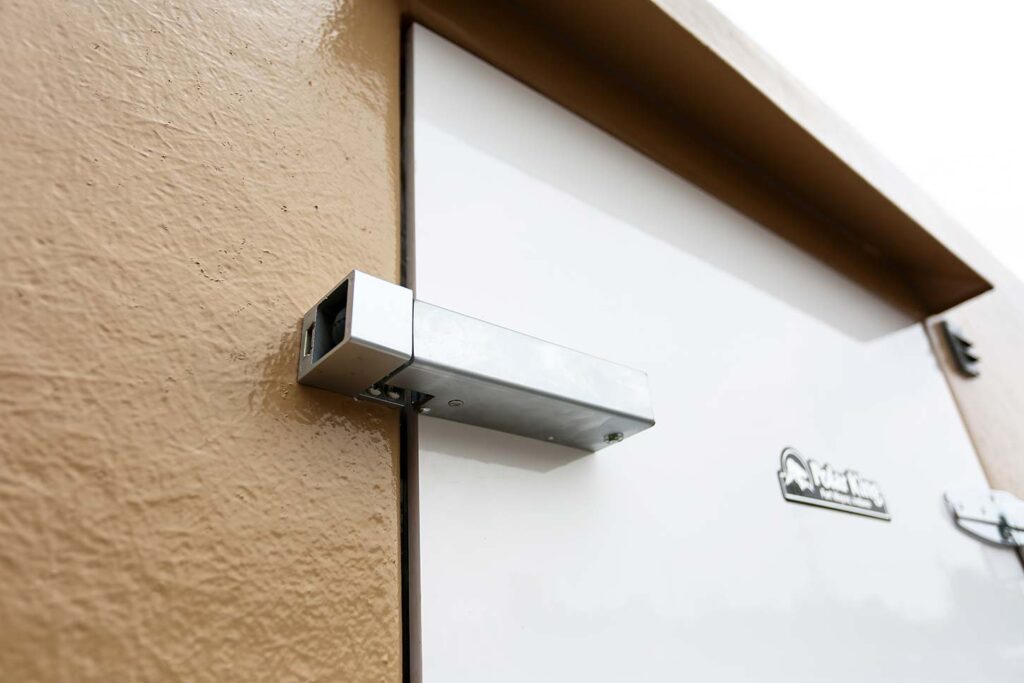
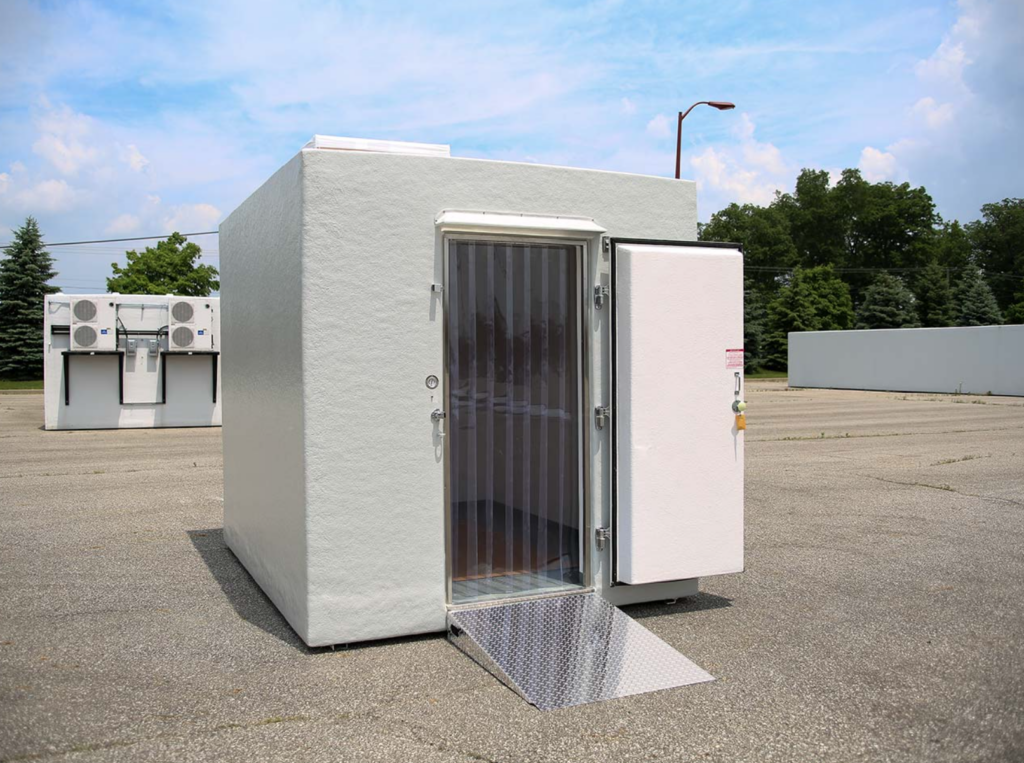
This disruptive maintenance task isn’t necessary if you choose one of our seamless, one-piece fiberglass units. Instead of depending on separate crews to assemble and seal a paneled walk in on site, our units arrive as pre-built structures designed for set-in-place installation. That helps limit the kinds of installation variables that can lead to air leaks, moisture intrusion, ice buildup, and repeated service calls later.
Common maintenance-related cost drivers include:
- Recaulking or resealing panel seams
- Addressing ice or frost buildup
- Replacing worn gaskets or door hardware
- Repairing rust, dents, or corrosion
- Correcting installation-related gaps or alignment problems
- Additional refrigeration service caused by excessive run time
Why walk in cooler downtime can cost more than the repair
If you are storing food, pharmaceuticals, ingredients, or temperature-sensitive inventory, downtime creates immediate risk. Product may need to be moved, monitored, discarded, or replaced. Staff may have to shuttle inventory to another location. You may even need a temporary rental. In foodservice, a temperature failure can also affect menu availability, customer confidence, and food safety.
Downtime can be especially disruptive for single-site establishments because there may not be another nearby facility to absorb inventory. Larger institutions, such as school districts, may have more backup options, but moving food between locations is still inefficient and inconvenient.
Reliability is not just a facilities issue for multi-unit operators. It’s a business continuity issue.
The question is not only how much the repair costs. It’s also what happens to your operation if your unit is down for a day, a weekend, or longer?
Outdoor walk in refrigeration has different cost drivers
Outdoor walk in coolers and freezers face conditions that indoor units don’t.
Coastal environments, wet climates, extreme heat, and extreme cold can all accelerate deterioration. Salt air can be especially hard on metal components. Temperature swings can affect seams, seals, and exterior materials. In cold regions, cooler applications may need freeze protection to prevent product from freezing when outdoor temperatures drop.
Outdoor construction should be evaluated carefully. A unit adapted for outdoor use is not the same as a unit engineered for outdoor use.
Look closely at:
- Exterior material
- Roof design
- Door construction
- Hardware protection
- Weather resistance
- Floor construction
- Insulation type and thickness
- Refrigeration package
- Freeze protection options
- Corrosion protection for harsh environments
Those design choices make a big difference over a 10-year ownership period. A walk in that is built for outdoor conditions from the start is better positioned to resist weather-related wear, reduce maintenance issues, and deliver a longer, more predictable service life.
Standardizing walk in refrigeration reduces cost across locations
For multi-unit operators, it’s important to consider the system you create across your organization.
When each location has different equipment, parts, hardware, refrigeration components, and service requirements, maintenance becomes harder to manage. Your team may need to stock more parts, track more variations, train on more equipment, and rely on more specialized service knowledge.
Standardizing your walk in refrigeration specifications can help simplify:
- Replacement part inventory
- Service procedures
- Warranty tracking
- Staff training
- Preventive maintenance
- Budget forecasting
- Future purchasing decisions
Standardization also helps buyers know what they are getting from one project to the next. That is especially valuable for school districts, restaurant groups, grocery operators, and other organizations adding or renovating locations over time.
How to compare walk in refrigeration proposals
A good proposal comparison should include more than purchase price. Instead, use a 10-year view that includes:
- Initial equipment cost. What is the base price of the walk in cooler or freezer?
- Installed cost. What labor, assembly, refrigeration, electrical, delivery, or startup costs are required?
- Estimated energy cost. What is the projected annual kWh use, and what does that mean at your utility rate?
- Maintenance requirements. What routine maintenance is required to protect performance?
- Warranty coverage. What is covered, for how long? Does it include the floor, roof, doors, hardware, compressor, and refrigeration components?
- Downtime exposure. What would it cost to lose the unit temporarily?
- Expected service life. How long should the unit realistically last in your climate and application?
- Standardization value. Will this equipment simplify or complicate operations across your portfolio?
This approach gives purchasing, facilities, operations, and finance teams a better basis for decision-making.
The Polar King difference
When you compare walk in refrigeration through a 10-year ownership lens, construction matters. At Polar King, our walk in coolers and freezers are built as seamless, one-piece fiberglass units designed to provide energy-efficient operation even in the toughest outdoor environments.
Each of our factory-built units arrives ready to go with just a simple electrical connection, helping reduce field-installation variables. Multi-unit operators can see even higher value with simplified maintenance, stronger outdoor durability, more predictable installation, and lower cost of ownership over time.
You’ll also find long-term value in the service life and warranty coverage of Polar King outdoor walk in coolers and freezers. According to Parsenow, a properly maintained Polar King walk in can remain in service for decades, even in harsh environments, while outdoor panel boxes will typically have significantly shorter lifespans. Polar King’s 12-year limited structural warranty includes the roof, doors, floor, interior and exterior surfaces and frame, giving buyers a clear basis for evaluating long-term durability.
Walk in refrigeration total cost of ownership FAQs
What is included in the total cost of ownership of a walk in refrigerator or freezer?
The total cost of ownership of a walk in refrigerator or freezer includes the purchase price, installation, refrigeration setup, electrical work, energy use, maintenance, repairs, downtime, product risk, warranty coverage, and eventual replacement cost.
How do you estimate the 10-year cost of a walk in cooler or freezer?
Start with the installed cost, then add 10 years of estimated energy use, expected maintenance, likely service costs, downtime exposure, and any replacement or refurbishment costs. Ask each manufacturer for estimated energy consumption so you can compare proposals using your local utility rate.
Why can a cheaper walk in refrigerator or freezer cost more over time?
A cheaper walk in refrigerator or freezer may require more field labor, more maintenance, more service calls, or more energy to operate. If the unit experiences downtime, product loss or temporary storage costs can also erase upfront savings.
What should multi-unit operators ask before buying walk in refrigeration?
Multi-unit operators should ask what is included in the quote, how the unit is installed, what energy use is expected, what maintenance is required, what the warranty covers, how long the unit should last outdoors, and whether the equipment can be standardized across locations.